Sequential Stewardship: Promoting Water Conservation and AI Infrastructure Resilience Through Reliable Water Reuse
As AI drives demand for water-intensive cooling systems, data centers don't have to compete with communities for drinking water. Sequential Stewardship offers a framework for sourcing reuse water that supports hyperscale development while protecting local resources and creates lasting advantages for both developers and municipalities.
Published on
September 9, 2026
.avif)
Contributors
.avif)
Noah Throm
Water Resource Engineer

The Evolution of AI and Resource Constraints
The rapid expansion of artificial intelligence (AI) is transforming industries and reshaping the global economy. Increased demand for hyperscale development depends on energy and water sustainability and on whether existing infrastructure can simultaneously support local communities and data center development. Many regions, particularly those in water-stressed areas, are concerned that increased data center cooling requirements will reduce their access to water as droughts become more frequent and intense. The expanding demand for AI technologies highlights the limitations of existing public infrastructure and traditional resource allocation, often requiring more collaborative and creative solutions to achieve mutually beneficial outcomes for communities and industry.
Optimizing Power Drives Water Demand
Compute IT power demand, or the maximum rate of electrical power needed for models to function at any given moment, is soaring as AI use skyrockets. This has resulted in substantial rises in hyperscale datacenter power requirements. The rapid increase in power use has necessitated that the data center industry improve its power efficiency. One of the highest-impact changes data center sites have begun implementing to improve power efficiency is lowering their Power Usage Effectiveness (PUE) ratio. The PUE is the ratio of a site's total power used to the power used specifically for IT purposes.

The closer a data center's PUE ratio is to 1, the less power it devotes to non-computing tasks (e.g., lighting, facility temperature control, server cooling), indicating more efficient use of power. The growing importance of reducing PUE precipitated a general shift from air-cooled systems (PUE of 1.3–1.5) to more power-efficient water-cooled systems (PUE of 1.1 or less), resulting in a minimum 66% reduction in non-IT power usage and an overall facility reduction of at least 15%. This represents a significant decrease in overall power consumption, allowing data centers to substantially increase data output for a given power input.
However, there are trade-offs to the improved power efficiency of a water-cooled system: its water intake. The key to this process's unique power efficiency compared to other cooling methods lies in leveraging water's latent heat of vaporization as the primary mode for heat rejection. In evaporative cooling towers, water is allowed to undergo a phase change from a liquid to a gas (water vapor), which consumes a large quantity of energy (heat). Gaseous water vapor evaporates into the atmosphere, returning to the environmental water cycle, while the remaining liquid water is cooled to a substantially lower temperature, allowing it to return to the cooling system to receive server heat once again. The very same physical mechanism of evaporative cooling that reduces required power consumption also necessitates increased water input, making it impossible to simultaneously reduce power and water consumption through this process.
The Strategy of Sequential Stewardship
Even as water demand rises to support hyperscale evaporative cooling, proactive communities and industries are avoiding zero-sum resource competition by collaboratively managing local water resources. One alternative approach shifts the focus from using less water for the cooling process to instead reusing water that has already served a beneficial purpose. Sourcing reclaimed or recycled (reuse) water for industrial cooling allows abstracted water to provide multiple beneficial uses before ultimately returning to the environment.
Not every data center development needs potable drinking water for its evaporative cooling. Instead of creating a simultaneous demand on a community's drinking water source, data centers can use water after it's already been utilized for municipal or low-impact industrial needs. This model of Sequential Stewardship provides a proactive framework for water utilization that promotes hyperscale development while preserving community water resources. Water reuse techniques are robust tools that can effectively leverage water sources to support both efficient energy use and sustainable water stewardship.
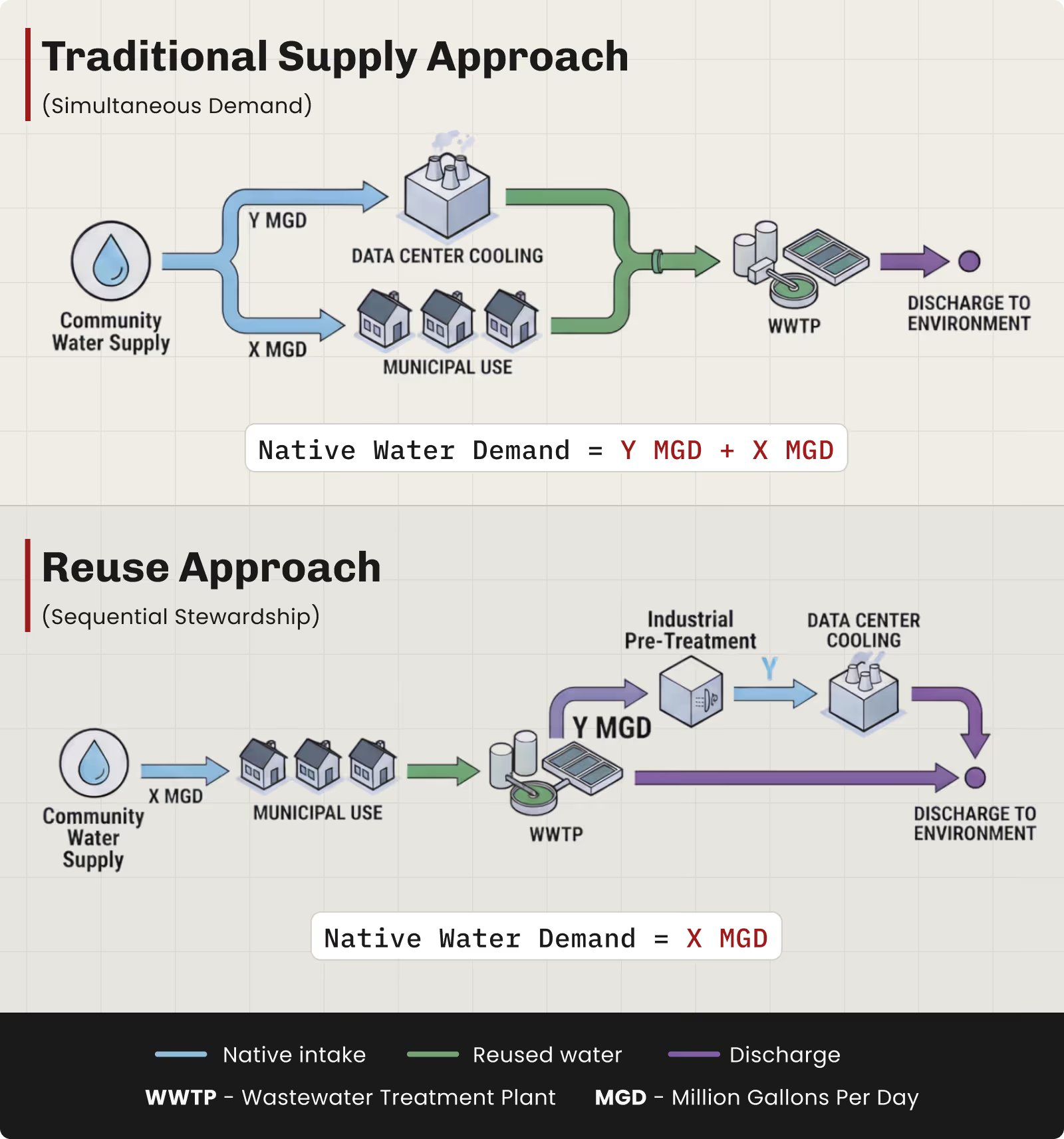
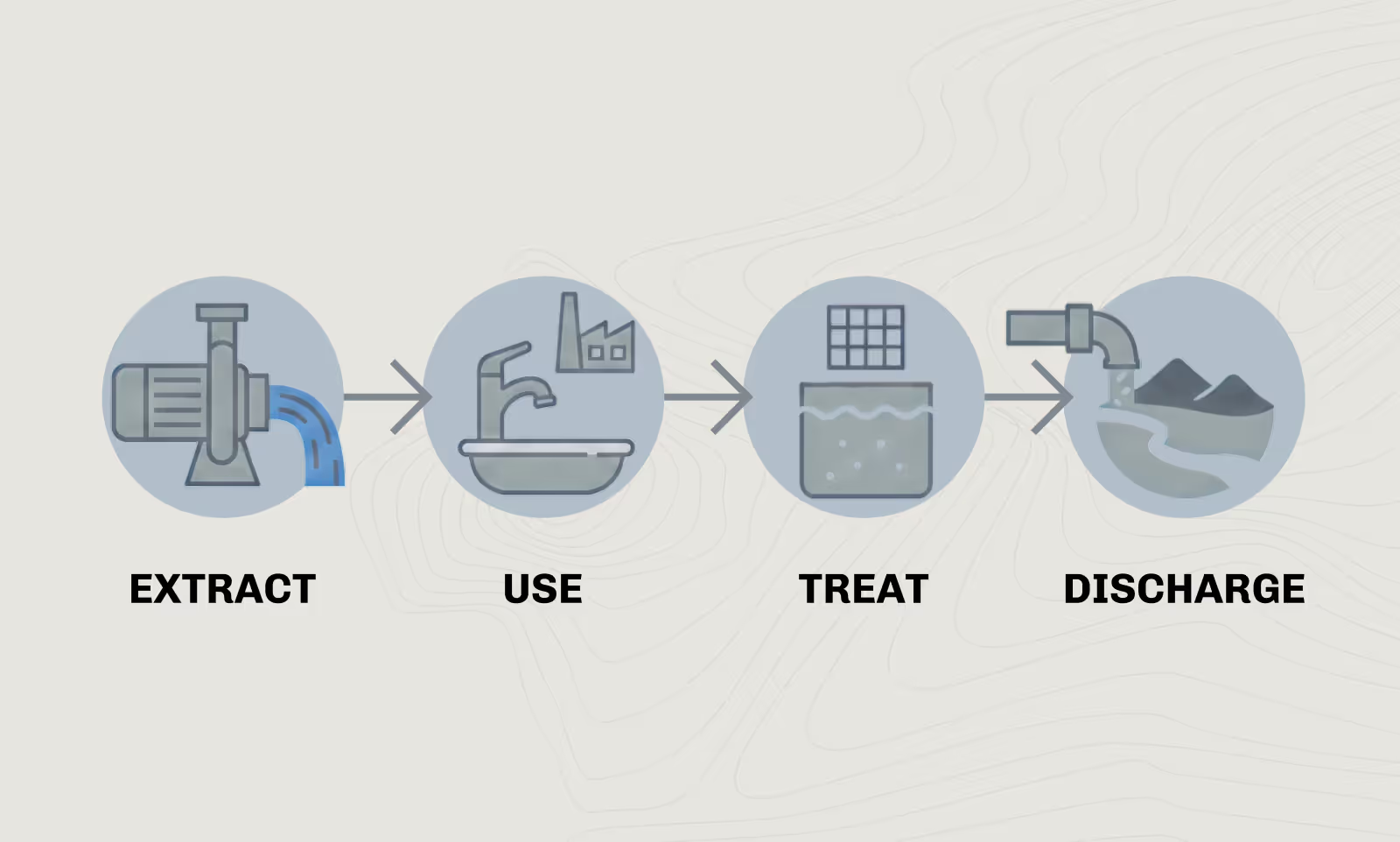
Data centers can tap into local wastewater treatment plant effluent flows to utilize water that a community has already put to beneficial use, rather than creating an additional potable water demand. The traditional framework follows a linear resource consumption path as follows:
The Sequential Stewardship model transitions to a looping resource framework:
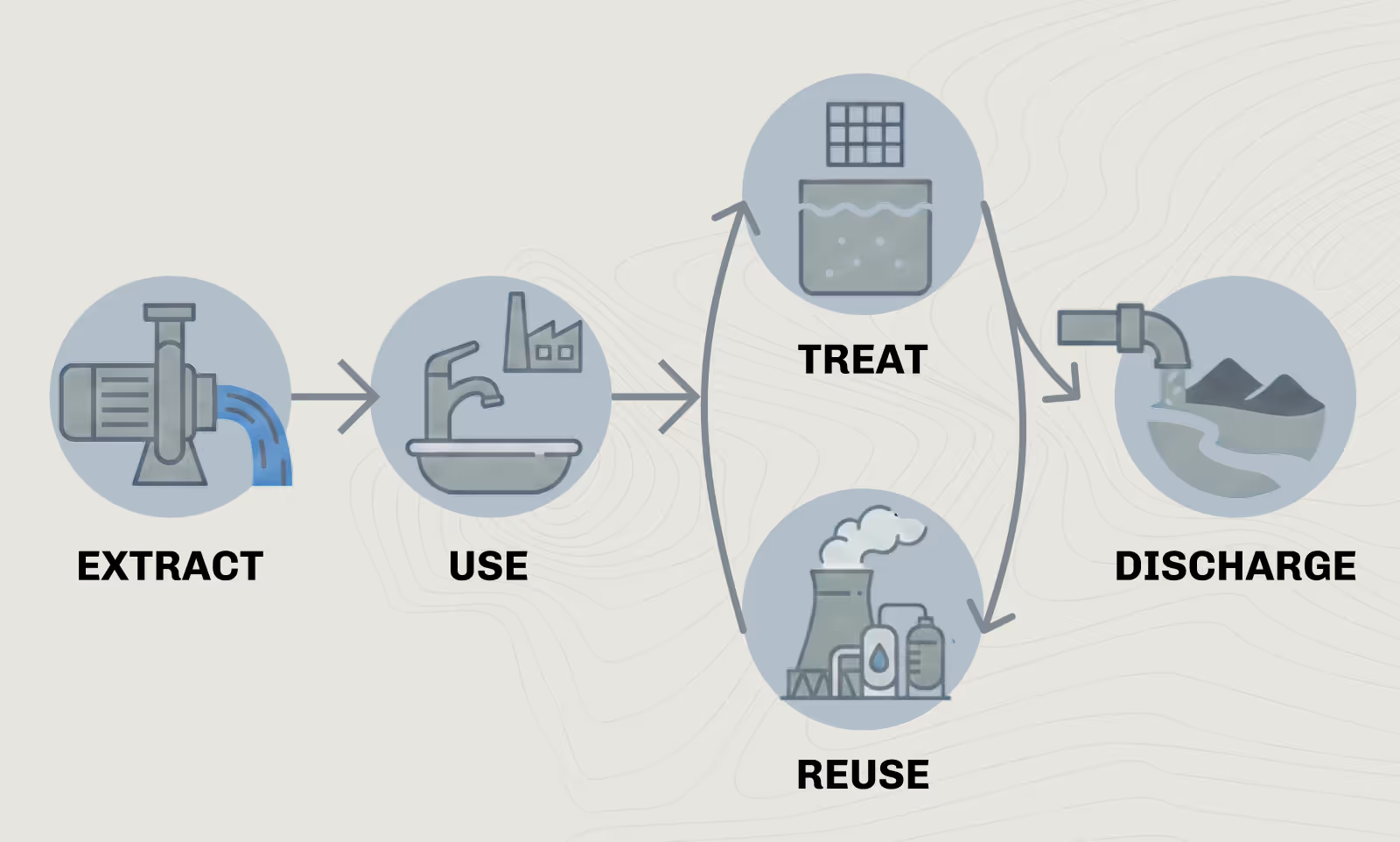
This looping resource approach maximizes the utility of each abstracted water drop, strengthening water-stewarding partnerships between communities and industrial users. By tapping into reuse water, industrial users, including hyperscalers, secure reliable cooling operations while reducing the demand on both local water sources and municipal systems.
However, transitioning from a traditional single-use framework to a Sequential Stewardship loop isn't simply a matter of routing water from a different source; effectively and sustainably implementing it for all involved parties requires collaborative communication, unique considerations, and increased diligence in managing water-quality handoffs between reuse partners.
Navigating Looped Resource Constraints
Sourcing reuse water provides a promising approach to water sustainability concerns, but it comes with some unique considerations for those evaluating its implementation.
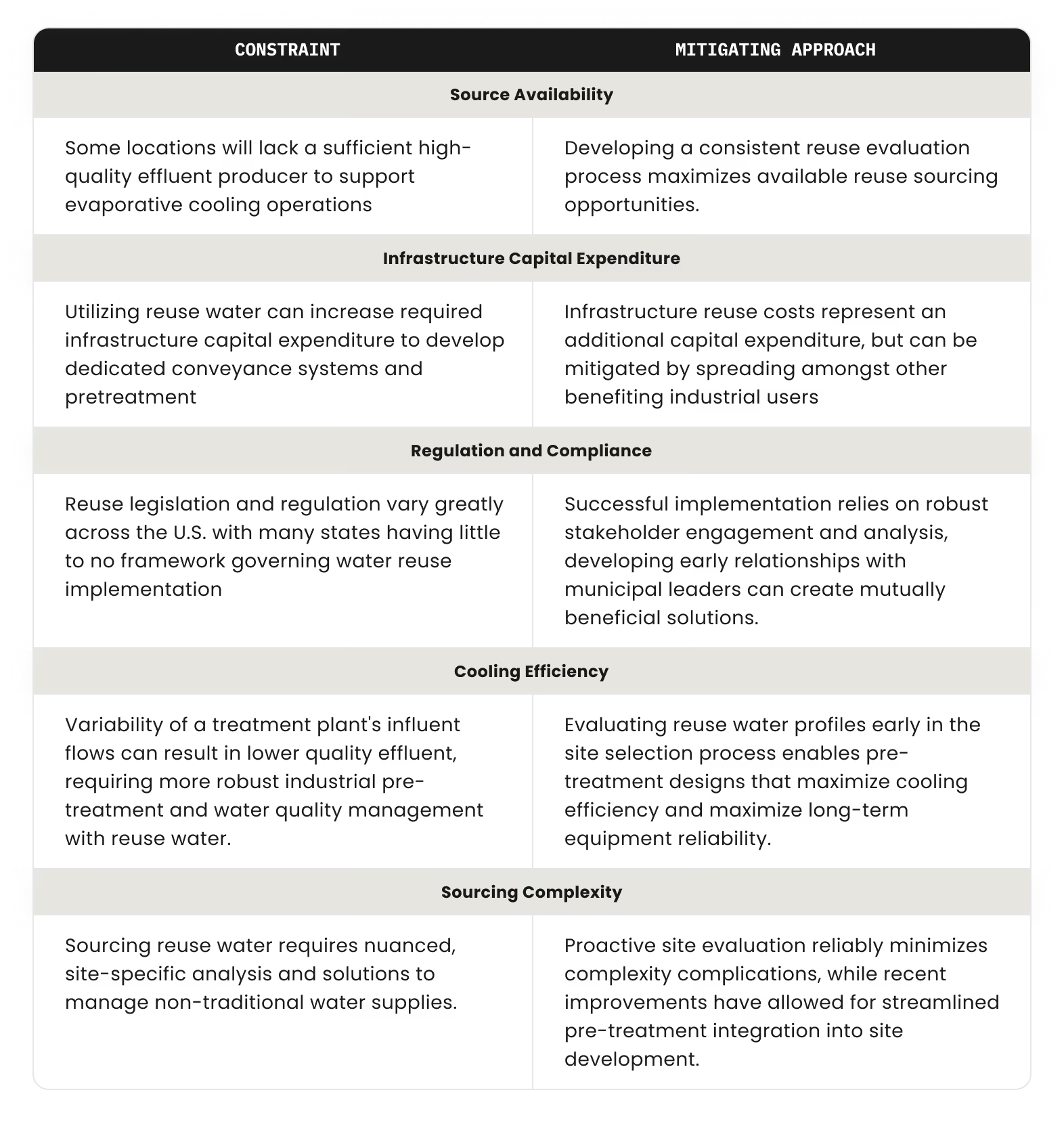
Though these areas can pose unique challenges, with collaborative discussion, proactive planning, and diligent investigation, the obstacles to sourcing reuse water can be nimbly navigated when identified early and planned for properly. When reuse is adequately investigated and deemed appropriate, it provides a powerful tool that creates compounding advantages for both developers and communities long-term.
Unlocking Advanced Opportunities from Reuse
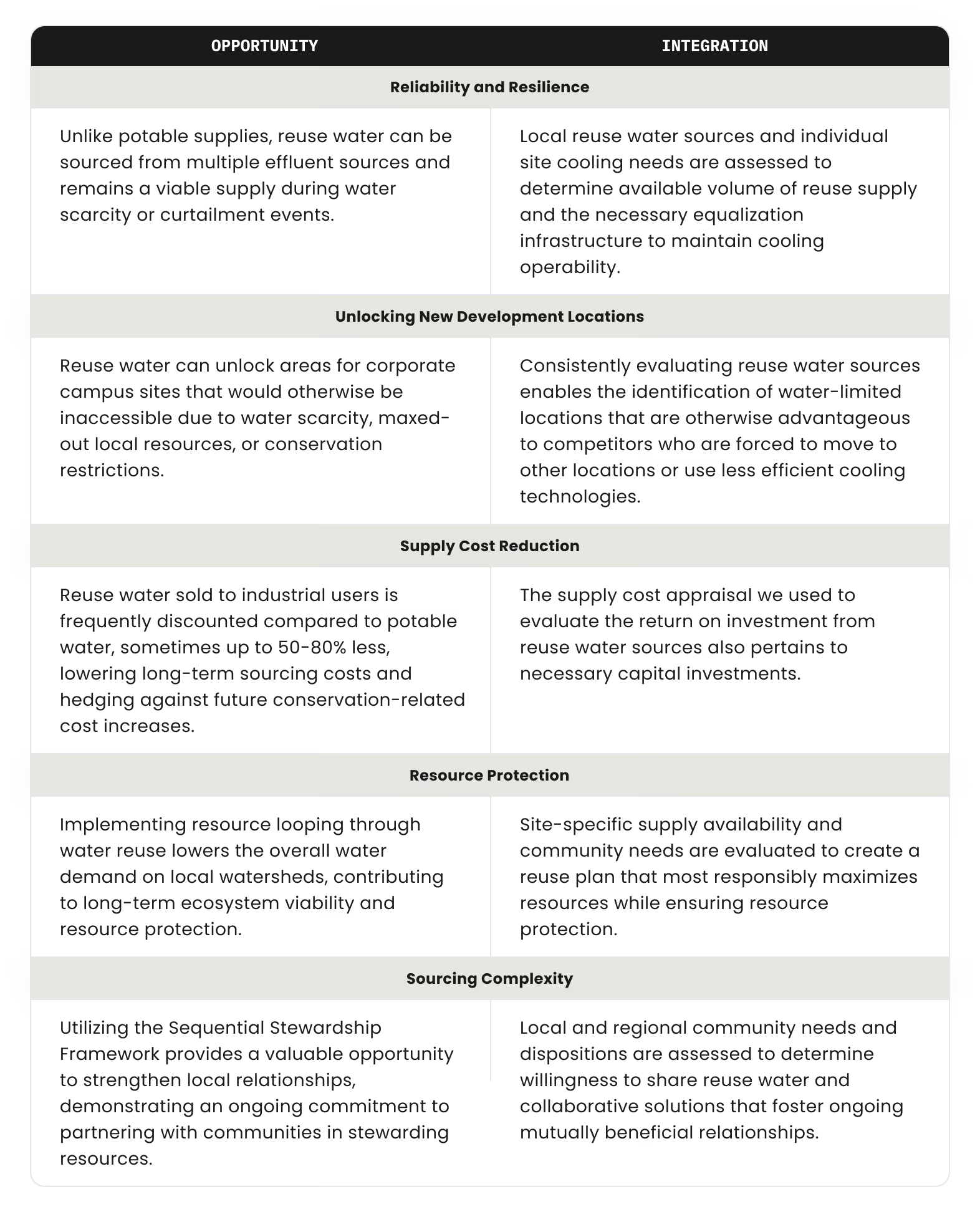
In addition to the environmental and community benefits of sourcing reuse water, this approach also provides industrial users with several powerful advantages over traditionally supplied potable water.
Executing the Shift to Sequential Stewardship
Proactively integrating the evaluation of Sequential Stewardship into site due diligence positions industrial operators as resilient infrastructure partners at the intersection of AI development and global water sustainability. Successfully executing the shift to resource looping requires collaborative communication and strategic alignment, necessitating buy-in from both developers and municipal leaders. This investment yields a mutually beneficial outcome: developers gain long-term asset resilience and operational efficiency, while municipalities promote regional resource stability and responsible stewardship. Ultimately, navigating the additional complexities of implementing Sequential Stewardship compounds invested resources by transitioning water from a threatened limiting factor to a catalyst for forging enduring community partnerships that enhance institutional trust and responsibly secure the longevity of local resources.