Sustainable Solutions: Decentralized Wastewater Management
Smart wastewater management is key to sustainable development. Here's how scalable solutions are keeping up with the demand.
Published on
October 23, 2026

Contributors

Tyson Schlect
Project Manager

Population growth and industrial redevelopment transform communities, bringing both opportunities and challenges. Rapid development often places significant stress on existing infrastructure, particularly on utility systems like wastewater management. In burgeoning communities and revitalized industrial areas, strategic planning and infrastructure upgrades are necessary to maintain quality of life and environmental integrity. In contrast to prior eras of growth, technology now enables decentralized approaches that are tailored to the environmental needs of disparate areas.
Water and wastewater systems are well-positioned to implement decentralized approaches. Decentralized wastewater systems treat wastewater at or near the source where it is generated - as opposed to conveying it to a centralized treatment plant - and offer notable benefits, including flexibility, scalability, and conveyance efficiency. They enable customized technical solutions proportionate to the needs of the local community, ensuring that capital investment and operational revenue remain localized and reflect regional ecological priorities.
However, they also require precise management and ongoing performance monitoring to meet the stringent water quality standards governing wastewater discharge and water reuse applications. In partnership with owners, INFRA addresses these potential risks by employing a rigorous, data-driven approach to ensure decentralized systems operate efficiently, reliably, and cost-effectively.
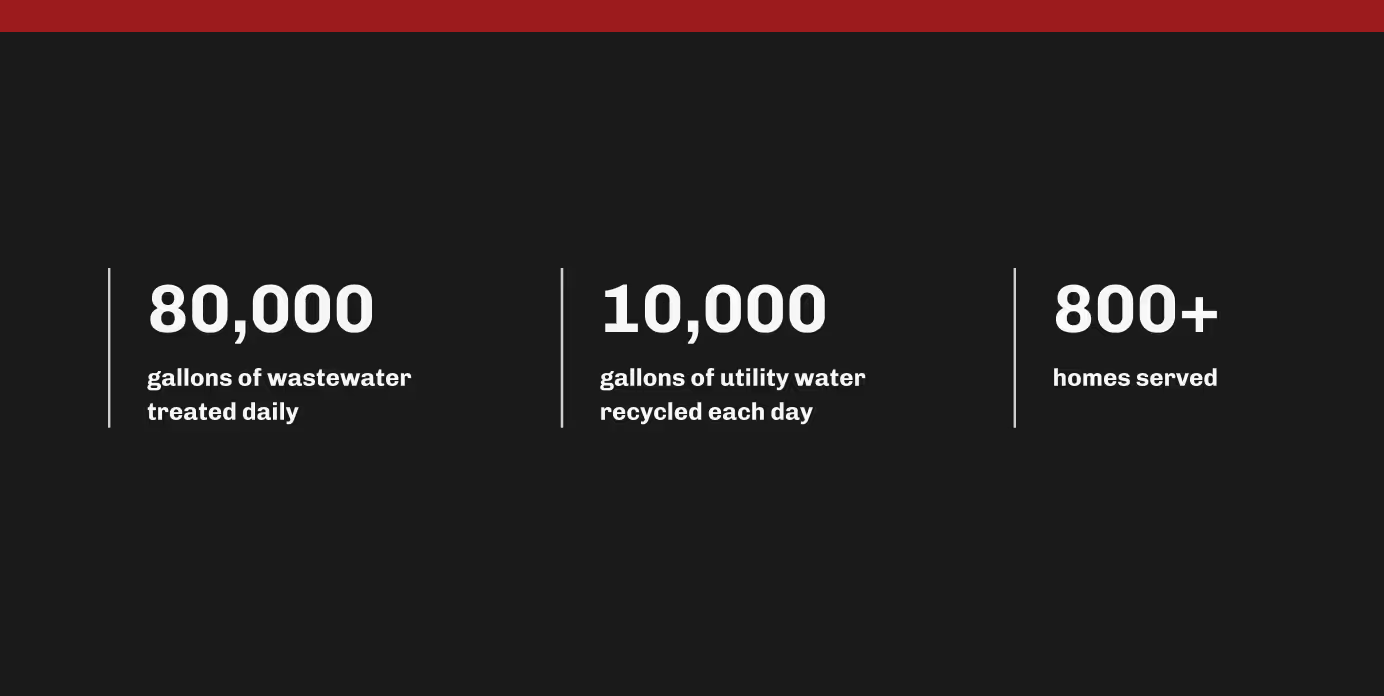
Dry Creek Ranch, an expansive housing community in the foothills of Boise, is an example of decentralized wastewater treatment and reuse. The development area was too distant from centralized systems to be efficiently conveyed, and preservation of the legacy agricultural ecosystem required robust water-quality management. As more families moved into the area, the community's wastewater system required further expansion. INFRA science & engineering responded with updated system planning that included a modified conveyance strategy to accommodate a shallower lift station, biological activated sludge treatment to remove nutrients and protect drinking water supplies, and expanded pumping within the existing footprint to minimize space impacts in the surrounding natural hill area. The upgraded system now effectively serves over 800 homes and processes up to 80,000 gallons of wastewater per day. The system also includes designs to recycle 10,000 gallons of utility water daily. These improvements illustrate how proactive infrastructure upgrades can sustainably support population growth without compromising environmental responsibility.
The successful implementation at Dry Creek Ranch serves as a prime example of how investing in advanced, localized utility solutions not only addresses immediate infrastructure needs but also establishes a sustainable framework for future development. This project demonstrates to communities experiencing similar population growth the value of forward-thinking infrastructure planning.
INFRA science & engineering specializes in helping communities and revitalized industrial areas navigate the complexities of growth through sustainable infrastructure upgrades. Contact us to learn how we can support your organization’s journey toward sustainable, resilient growth.