The Hydrogeologic Blind Spot in Hyperscale Data Center Development
Water availability rarely eliminates a data center site but it often limits the ability to implement evaporative cooling at scale. Examine why hydrogeologic characterization needs to move earlier in the site selection process, and what's at stake when it doesn't.
Published on
October 23, 2026
Contributors

Ryan Lewis
Senior Engineer
.avif)
Una Wilson
Environmental Research Associate

"Water availability rarely eliminates a data center site. More often, it limits the ability to implement evaporative cooling at the scale originally envisioned, forcing a shift toward less efficient and more operationally expensive cooling strategies."
For most hyperscale data center companies, evaporative cooling is typically the preferred strategy due to its superior operational efficiency and cost advantages. However, evaporative cooling systems require substantial volumes of water circulation to support thermal management at hyperscale data centers. While these systems are often characterized as high-consumption infrastructure, the reality is more nuanced. Water continuously cycles through the cooling process, with portions treated, discharged, and ultimately returned to the surrounding hydrologic system rather than permanently removed from it.
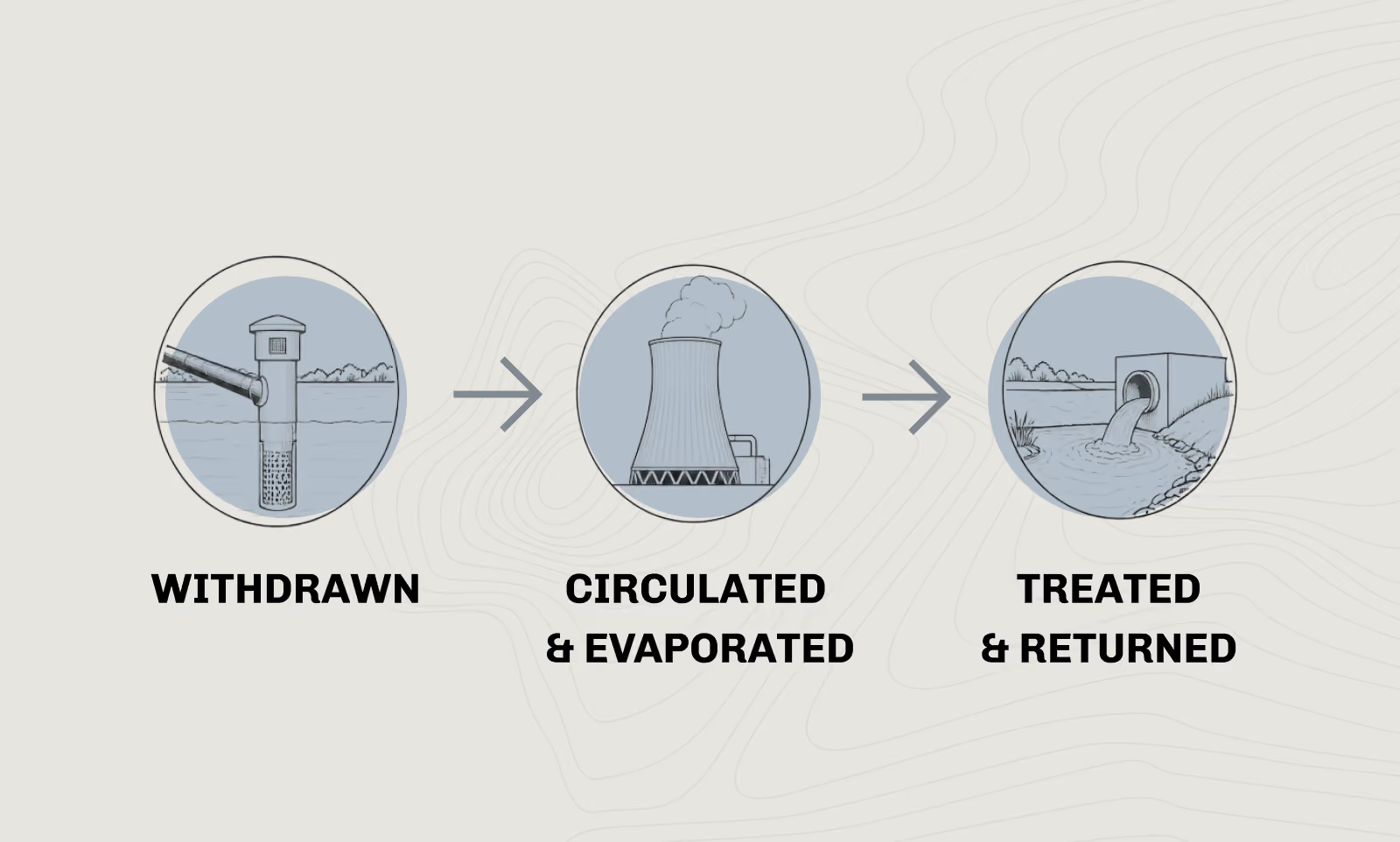
The issue, therefore, is not simply that evaporative cooling uses large quantities of water; it is whether a site's available water resources can sustainably support that demand over the operational life of the campus.
In hyperscale data center development, the early stages of site selection are typically driven by familiar constraints: power availability, fiber connectivity, land acquisition, and the need for rapid deployment to meet compute capacity demands. Water is always part of the conversation, but too often it is evaluated primarily as a utility procurement exercise rather than as a long-term infrastructure constraint directly tied to cooling strategy.
In many cases, the primary water question becomes how much supply the local utility can provide and how quickly it can be delivered, rather than how much demand the surrounding hydrologic system can sustainably support over the operational life of the campus.
That distinction is where projects often lose their competitive advantage.
The Economics Behind Cooling Strategy
Once early-stage planning efforts and conceptual water availability assessments suggest evaporative cooling may be viable - whether through groundwater production, surface water access, or available municipal capacity - the role of water changes entirely. Instead of simply asking whether an adequate water supply can be secured, the question becomes whether the regional water system can sustainably support long-term hyperscale cooling demand while maintaining acceptable impacts on surrounding users, infrastructure, and the environment.
Hydrogeology is no longer a secondary consideration in infrastructure. It becomes a primary driver of site selection.
The obvious counterargument is straightforward: if water sourcing introduces permitting complexity, reputational risk, infrastructure cost, stakeholder opposition, sustainability concerns, and long-term operational uncertainty, why not simply avoid the issue altogether and rely exclusively on non-evaporative cooling systems?
In some cases, that is exactly what happens.
Air-cooled systems often become the default solution when confidence in long-term water sourcing is insufficient or when projected operational risks outweigh the efficiency advantages of evaporative cooling. However, that decision is frequently reactive rather than strategic. It is the result of discovering - often after land acquisition, infrastructure planning, or utility coordination - that the water system simply cannot reliably support the original design intent over the life of the campus.
Evaporative cooling remains highly attractive from both an operational efficiency and economic standpoint. Lower power consumption, improved thermal efficiency, and reduced long-term operating costs can materially improve the performance of large-scale facilities, particularly as compute densities and cooling demands continue to increase. For hyperscale developers, the ability to confidently implement evaporative cooling can materially improve long-term operational economics at scale.
Hydrogeology and the Long-Term Scalability Problem
The viability of evaporative cooling is more complex than simply getting water to the site.
The availability of accessible groundwater resources near a site does not necessarily translate into sustainable long-term withdrawal capacity under continuous industrial demand. Similarly, nearby rivers and lakes may experience seasonal low-flow conditions, elevated temperatures, drought sensitivity, ecological withdrawal limitations, or competing regional demand pressures. Municipal systems may initially buffer some of these constraints through existing infrastructure and regional supply integration, but they remain fundamentally tied to the same long-term source capacity and regulatory limitations.
This becomes particularly important for campuses where initial cooling demand represents only a fraction of the site's ultimate long-term buildout conditions.
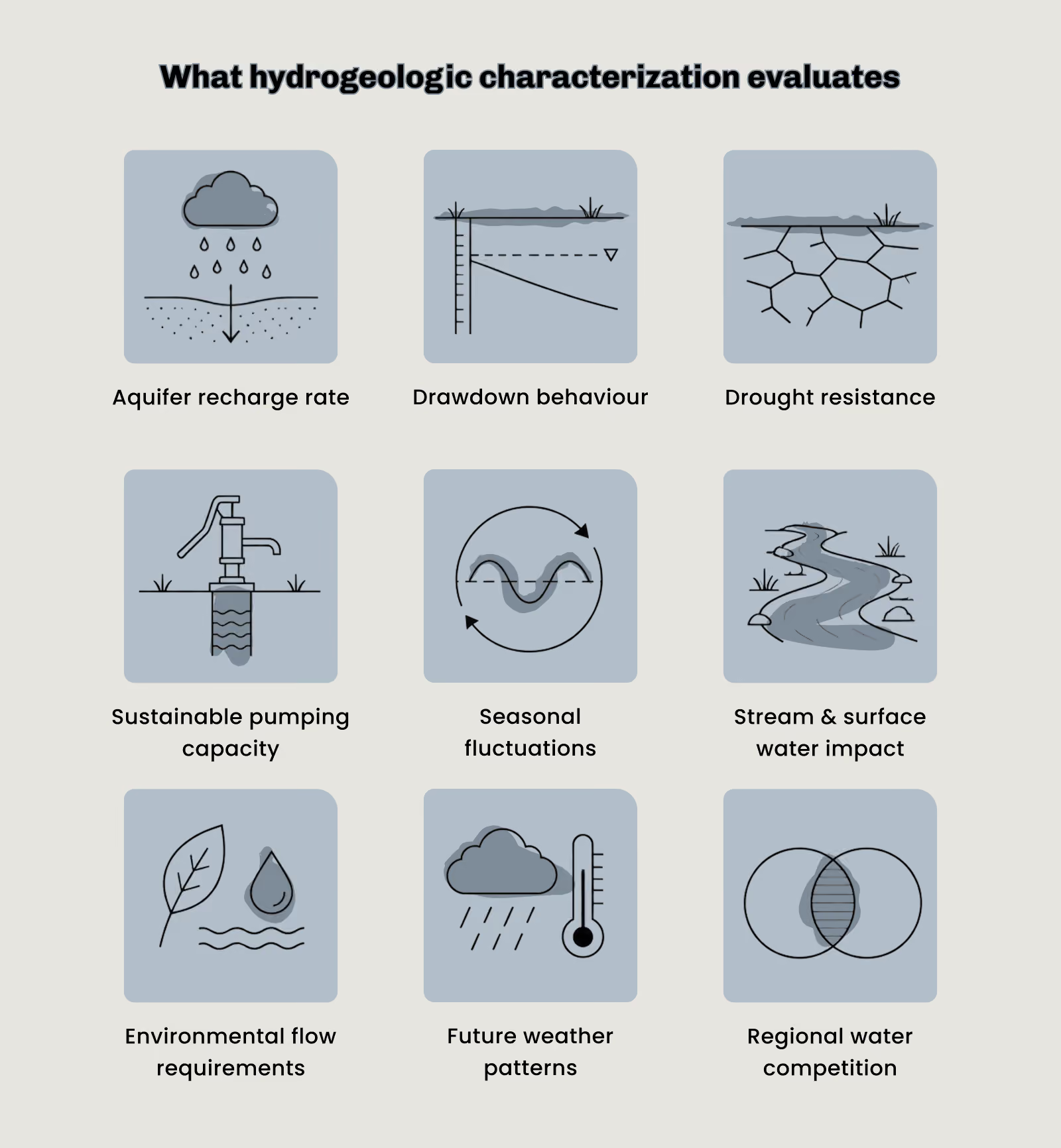
Most early planning teams focus on whether a sufficient water supply is currently available at a site and whether existing or upgraded infrastructure can support projected cooling demand. Hydrogeology metrics allow us to address a far more important question: can nearby water resources sustainably support hyperscale cooling demand over decades of operation without causing unacceptable long-term impacts on surrounding users, environmental resources, or the regional water supply?
The answer requires a multifactorial understanding of variables such as aquifer recharge rates, long-term drawdown behavior, drought resilience, sustainable pumping capacity, seasonal groundwater fluctuations, potential impacts on nearby streams and surface water systems, environmental flow requirements, predicted future weather patterns, and future competition for regional water resources from nearby industrial or municipal users. More importantly, those conditions must be evaluated against the phased expansion strategy typical of hyperscale campuses. Collectively, these evaluations help determine whether evaporative cooling can remain both operationally sustainable and economically viable throughout the long-term expansion of the campus.
A site capable of supporting initial cooling demand may not support full campus deployment decades later without significant infrastructure upgrades, operational restrictions, or a fundamental change in cooling strategy. In that sense, hydrogeology is not merely influencing water availability - it is influencing the long-term scalability and operational economics of the development itself.
Moving Hydrogeology Up the Site Selection Stack
Formal hydrogeologic characterization needs to occur far earlier in the site selection process than it often does today. Not simply through conceptual desktop evaluations, but through defensible investigations supported by meaningful field data and technical analysis. The cost of detailed hydrogeologic characterization is negligible relative to the long-term operational, infrastructure, and cooling-strategy implications associated with hyperscale development.
By the time detailed water studies begin - if they occur at all - sites have frequently already been shortlisted or purchased based primarily on power, fiber, and land availability. At this stage, discovering that evaporative cooling is either operationally risky or substantially more viable than originally assumed can fundamentally alter project economics, infrastructure planning, long-term operating assumptions, and even how limited regional power capacity is strategically allocated across future campus developments.
The most successful projects avoid this re-work scenario entirely. They treat hydrogeologic characterization as an early-stage screening tool alongside power, fiber, and land availability - not because every data center requires substantial water demand, but because an engineered understanding of regional water resources allows teams to make informed decisions regarding cooling strategy, infrastructure investment, and long-term campus scalability.
"Power, fiber, land, and hydrogeology should all influence where a data center is built. Long-term success depends not only on whether water can be supplied, but whether the surrounding hydrologic system can sustainably support the scale of development being planned."